

Custodians of the Ocean: A Year of Learning, Leadership and Lasting Change


New approach to marine education
Custodians of the Ocean, owned by Friends of Bongin Bongin Bay was co-created by several partners: Studio Oi, NSW Department of Primary Industries and Regional Development, First Nations People: Aboriginal Support Group Manly-Warringah Pittwater and St Luke’s Grammar Junior School at Bayview. The Program pilot was delivered by FoBBB and Studio Oi, bringing together science, creativity, storytelling and lived experience. Pia Dorer, a lifelong creative and founder of Studio Oi, led the creative direction and communication elements of the program. Dr Beata Edling, of FoBB,B brought an evidence-based approach to the program’s conceptualisation, scheduling and coordination.
The program was delivered once per school term in three to four-hour sessions - a deliberate move away from one-off workshops or assemblies. The aim was continuity, depth and trust.
The pilot program was delivered at St Luke's Grammar School, engaging 104 students across Years 1, 3 and 5. Each session was collaborative, interactive and designed around the VARK learning model - visual, auditory, reading and kinaesthetic - ensuring every child could engage in a way that suited their learning style.
Terms 1 and 2: Foundations, connection and two-way learning
Terms 1 and 2 focused on building strong foundational knowledge about the ocean - ecosystems, marine species, human impact, ocean users and global initiatives to protect our oceans - while also looking back to understand how First Nations peoples were custodians of land and sea for tens of thousands of years.
Students explored sustainable practices, respect for Country and the deep ecological knowledge that has long guided care for the ocean and waterways. This framing created a genuine two-way learning experience, where Western science and Indigenous knowledge sat side by side in caring for the ocean.
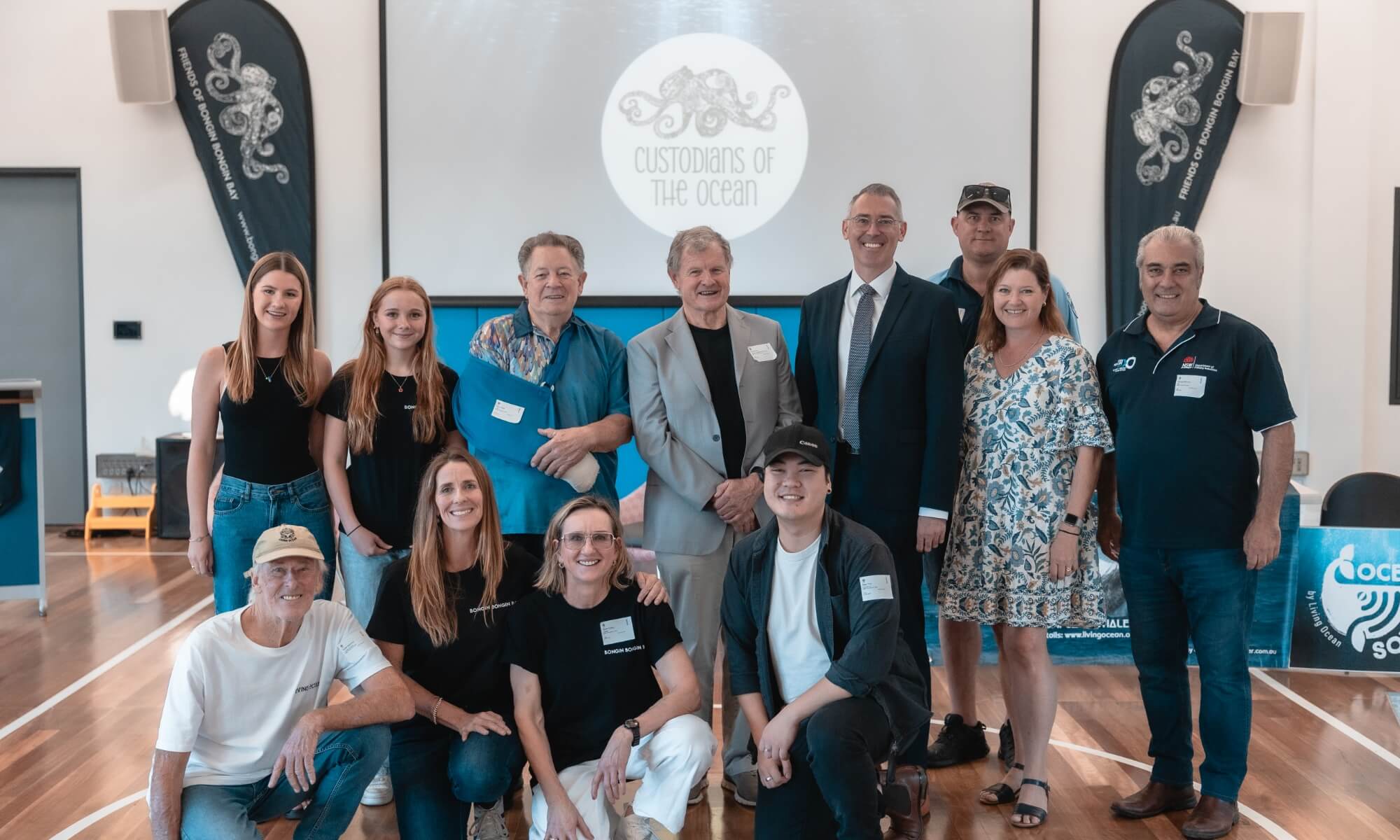
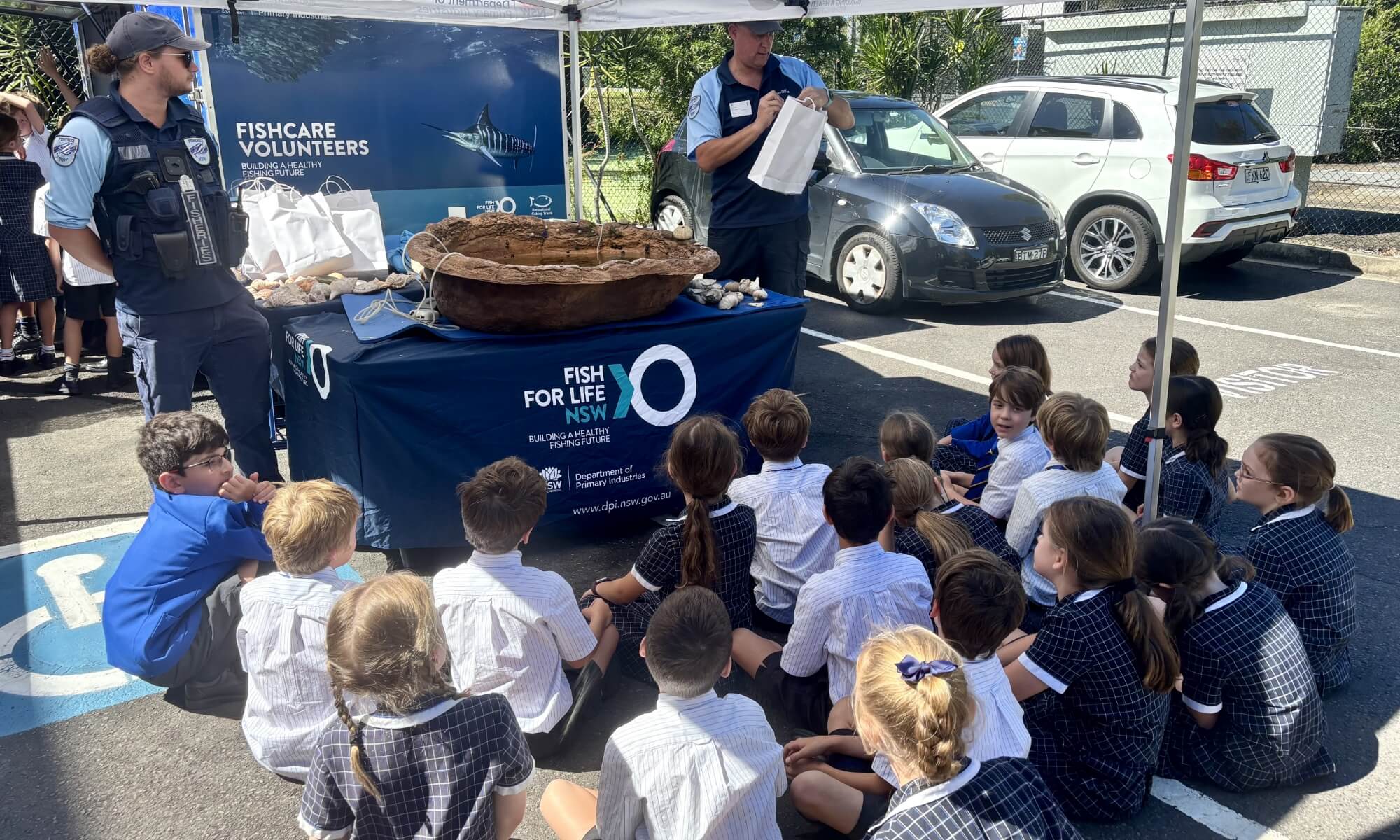
Term 1 special guests enriched this learning, including Robbi Newcombe from Living Ocean, award-winning conservation filmmaker Lara Gribbin, and First Nations representative Neil Evers, who helped ground the program in place, story and lived experience. The Department of Primary Industries provided the Bluey Trailer for children to experience first-hand the ocean creatures living on our doorstep.
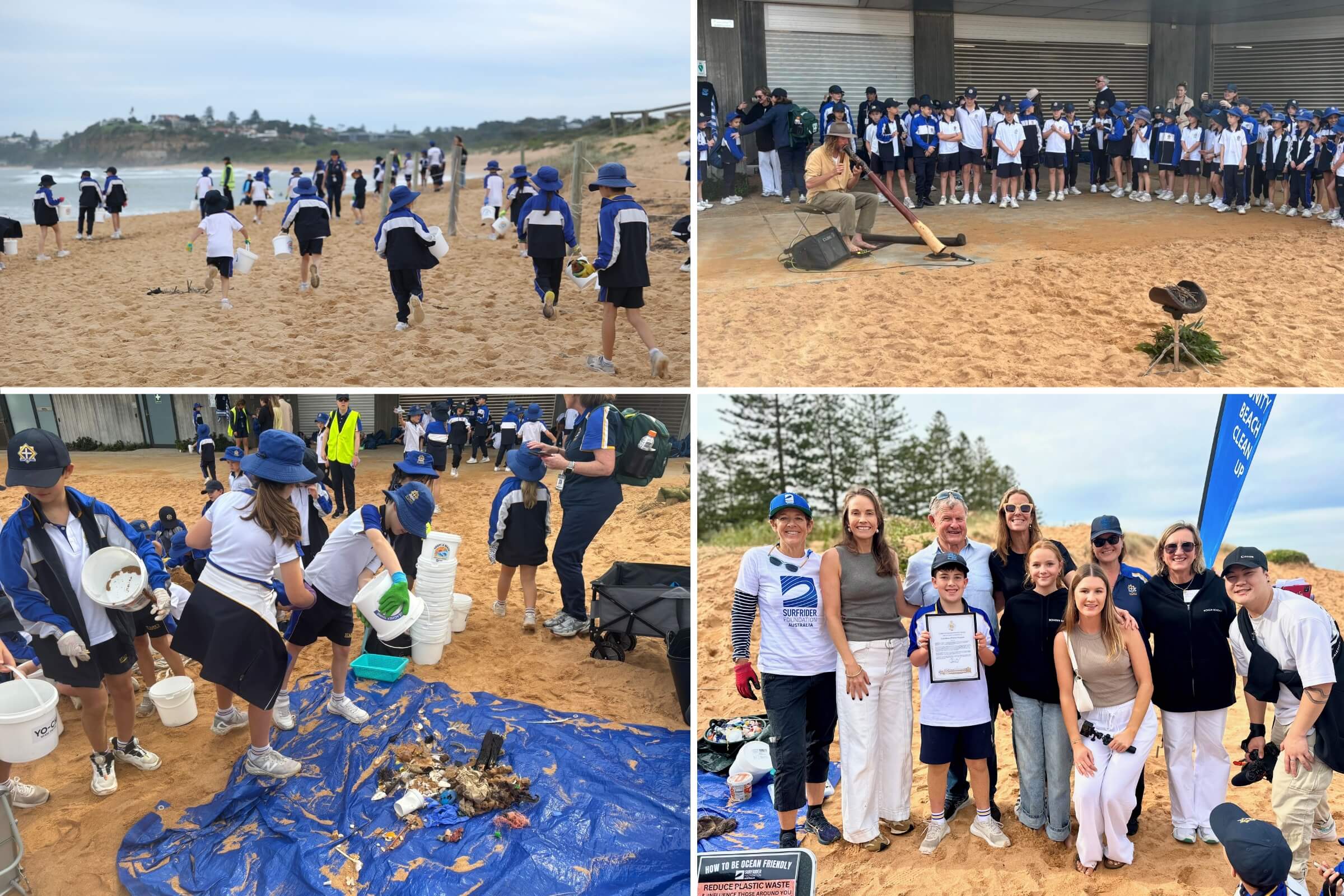
In Term 2, learning moved out of the classroom and onto Country and by the water at Mona Vale Beach and Bongin Bongin Bay. Cultural connection and storytelling were woven throughout the day, including a didgeridoo performance by Matt James alongside a traditional smoking ceremony with clapsticks led by Neil Evers. Following this cultural start to the day, the children moved into an environmental education session with a hands-on beach clean-up facilitated by Jude Furniss from the Surfrider Foundation.
Local MP Jacqui Scruby joined students on the beach - collecting rubbish, asking questions and learning alongside them. In just 20 minutes, 100 children collected 223 plastic items weighing 6.5 kilograms, making the scale and reality of marine pollution immediate and tangible.
A proud moment for FoBBB and COO was the presentation of a Community Recognition Statement from NSW Parliament by MP Jacqui Sruby.
Term 3: Turning learning into action
Term 3 marked a clear shift - from learning to leadership.
Across four specialised workshops, students were supported to turn their knowledge and concern into communication and action, with different pathways designed to reflect varied interests and strengths:
- Science data collection and analysis with marine biologist, Dr Will Knoke
- Painting and creative expression with renowned artist, Vicki Ratcliff
- Sculpture-making using collected plastics with Frieda Knoke
- Filmmaking and storytelling with Pia Dorer and Hieu Tran, covering consent, sound, lighting, narrative, interview techniques, filming and editing with Capcut.
The program reinforced a core message: there is no single way to be an ocean custodian. Advocacy can be scientific, artistic, practical or creative - what matters is understanding the issues and using your voice with confidence and care.
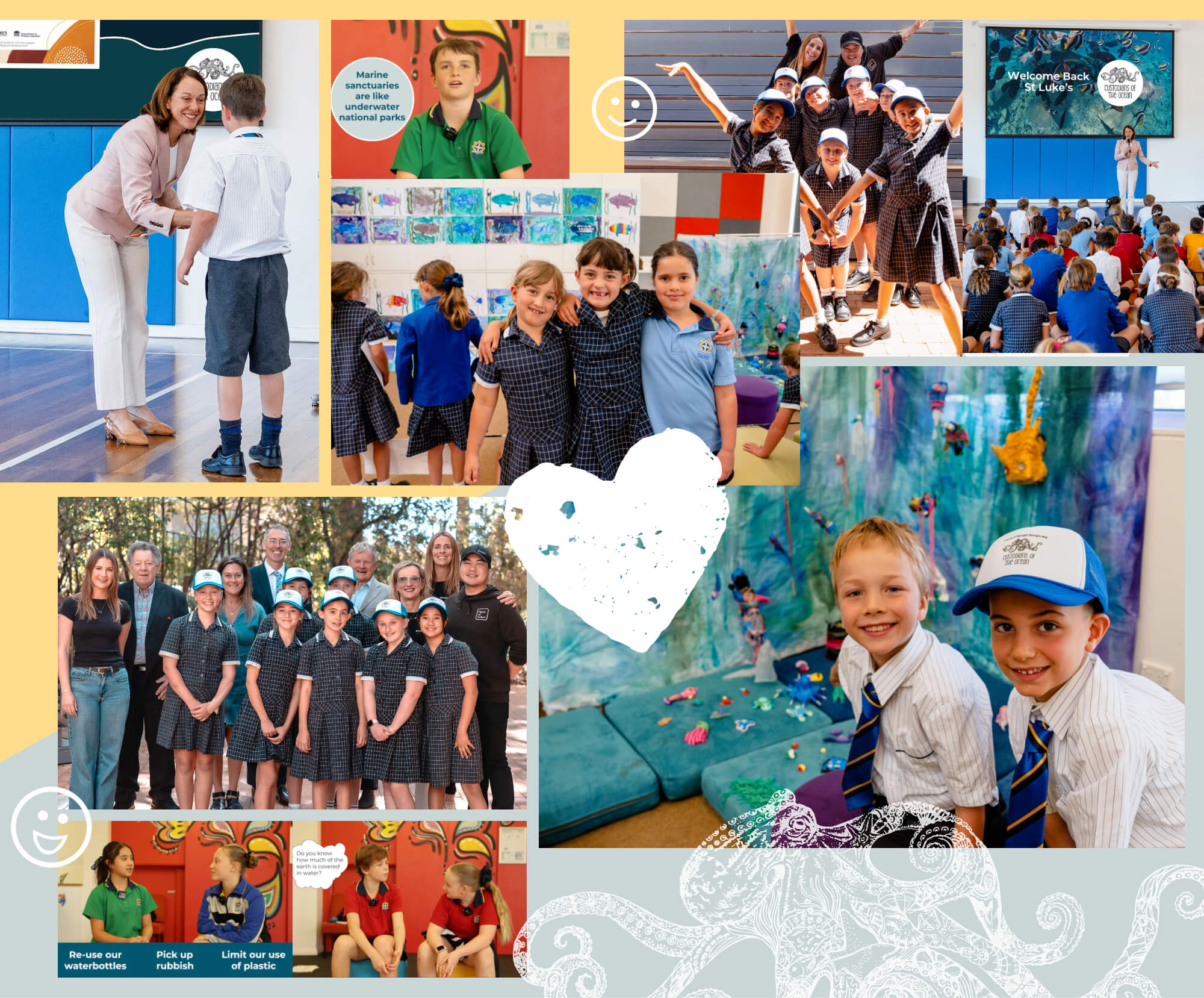
The workshops culminated in a powerful student-created sculpture from collected beach debris, paintings, scientific experience and an inspiring student-narrated video, bringing together footage and reflections from across the year.
We encourage you to watch the film, which captures the voices, ideas and energy of the children involved - in their own words.
Term 4: Graduation, celebration and voices raised
Term 4 was a milestone moment.
Parents, families and friends were invited to an official Custodians of the Ocean graduation ceremony, where all gathered to reflect on the year and celebrate what the students had achieved.
Together, we watched the journey unfold through the children’s voices, stories and art - raising and celebrating their perspectives as our newest ocean custodians.
Federal MP for McKellar, Dr Sophie Scamps, presented awards to all 104 participating St Luke’s students.
Each child received an official graduation certificate and a custom Custodians of the Ocean cap, worn immediately and proudly - a visible expression of belonging, confidence and responsibility. That moment captured the true gift of the program: the joy, empowerment and belief children felt in their ability to be real change-makers.
Head of Junior School Peter Scott commented:
The Custodians of the Ocean by Friends of Bongin Bongin Bay program has significantly strengthened students’ environmental awareness and sense of custodianship. Practical, place-based learning has encouraged active engagement with marine conservation. The inclusion of Indigenous knowledge has been highly impactful, deepening students’ respect for Country and waterways while fostering cultural understanding. With expansion, this initiative could deliver substantial environmental benefits and inspire broader community stewardship, ensuring future generations are equipped to protect coastal ecosystems. It represents an effective model for connecting education with meaningful environmental action.
Looking ahead
Custodians of the Ocean was delivered as a volunteer-led pilot program, created through the shared commitment and passion of Friends of Bongin Bongin Bay, Studio Oi, and a generous community of educators, creatives, scientists and supporters - all united by a love of the ocean.
The program is closely aligned with the NSW Department of Primary Industries, Marine Estate Management Educational Strategy and Program.
Feedback from students, parents and teachers has been overwhelmingly positive. Children returned to class buzzing with excitement. Parents reported that learning continued at home around the dinner table. Teachers spoke of the program’s rare ability to spark curiosity, confidence and sustained engagement.
Head of Junior School, Bayview, Peter Scott has confirmed his support for the program to continue next year. Even more encouraging, multiple schools and organisations have already expressed interest in partnering or participating in future iterations.
After an incredible first year, Custodians of the Ocean stands as a powerful example of what’s possible when communities come together.
Because when children are given knowledge, trust and the tools to lead, they don’t just learn about the ocean.
They become its custodians.